Page 1 of 1

What are you currently reading?

Posted: Tue Jun 02, 2026 7:21 am
by Alrune
Since we already have threads for film and painting, I thought I should create one for prose and poetry, since it seems like we have some readers here :happy:

Image

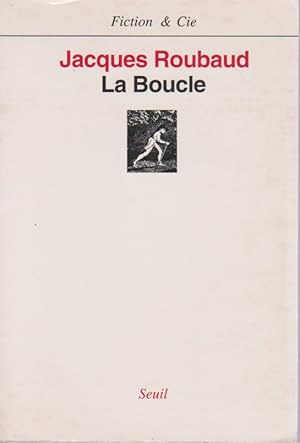
I am currently reading La Boucle by the oulipian* Jacques Roubaud. This is one of those literary projects that I like reading but find difficult to describe.

I will make an attempt: The book belongs to the larger cycle Le Grand Incendie de Londres. These 'autobiographical' prose works were written in place of a poetic 'Project' that Roubaud failed to write after the deaths of his wife and brother. What remains is written on top of the ruins of this Project.

One of the self-imposed formal constraints is simple: Roubaud writes his 'prose-moments' each morning and evening, in the gathering or fading light, recording his memories without revision. Another is the system of bifurcations. The narrative line advances chronologically, but at certain points it divides. A memory-image opens a new path by association. These paths may lead far from the original sequence, connect distant moments, return to earlier passages, or cast familiar scenes in a different light. The text is very generous in a sense, it gives the reader a lot of freedom to approach it in different ways, almost like a choose your own adventure book.

The most appealing aspect to me is the encounter between this rigorously conceived structure and the disorder imposed by the author's grief. Despite all the ornamentation of the prose, the playfulness of the narrative etc, what keeps me coming back to the book despite its difficulty is the encounter with a 'face' in the text. The face of a person that is struggling to move past the fact of death and the incessant return of their memories. The writing circles these limits without overcoming them, but the search becomes the work.

* Oulipo is a french-speaking writer's collective that use self-imposed formal “constraints” when writing, the most renowned example probably being Perec’s novel La Disparition, written without the use of the letter 'e'. Sometimes Oulipian constraints are geometric, algebraic or numerological, for example the plot of another of Perec’s books, La Vie mode d’emploi is engendered by means of calculations based on a “10×10 magic square.

Re: What are you currently reading?

Posted: Tue Jun 02, 2026 8:31 am
by Amlux
Great thread!
Alrune wrote: Tue Jun 02, 2026 7:21 am
* Oulipians are a french-speaking writer's collective that use self-imposed formal “constraints” when writing, the most renowned example probably being Perec’s novel La Disparition, written without the use of the letter 'e'. Sometimes Oulipian constraints are geometric, algebraic or numerological, for example the plot of another of Perec’s books, La Vie mode d’emploi is engendered by means of calculations based on a “10×10 magic square.
What language are you reading this Roubaud book in, if you don't mind me asking?

I read La Disparition many years ago in the English translation by Gilbert Adair, known as A Void. I honestly don't remember much about the plot, because the writing was so obtuse and strange as a result of the constraints that it is almost by necessity hard to understand. For one thing, the English translation writes almost entirely in the present tense, whereas the French uses the past tense... When you think about how many past tense words in English end in "ed," this was probably necessary. But the story is not really the joy of the book, of course. The fact that it was translated from French just adds another layer to the challenge and to the joy, I think. What's the only harder thing to do than writing a novel without using the letter "e?" Translating one! There are some pretty hilarious points actually, only augmenting the originally cheeky and self-aware original:

One example from the very second paragraph:
Plus-tard, on s'attaqua aux Nords-Africains, aux Noirs, aux juifs. On fit un pogrom à Drancy, à Livry-Gargan, à Saint-Paul, à Villacoublay, à Clingancourt.
A basic translation might render this as something like:
Later, they turned against Arabs, blacks, and Jews, carrying out pogroms in Drancy, Livry-Gargan, Saint-Paul, Villacoublay, and Clignancourt.

But how could you translate "juifs" ("Jews") without an "e?" Like this: :lol:
Arabs, blacks and, as you might say, non-goyim fall victim to racist attacks, with pogroms forming in such outlying Parisian suburbs as Drancy, Livry-Gargan, Saint-Paul, Villacoublay, and Clignancourt.
One of the moments I remember being most impressive was a section where the book gets meta and a character within delivers a lipogram (constrained writing with a letter missing) of his own! But his is missing the letter "a," meaning that his paragraph has to be missing both "e" AND "a!"

Original French:
Ottavio Ottaviani, sjustant son lorgnon, raclant son pharynx, s'adoucit la voix, prit son inspiration, puis lut, sur un ton plutôt froid:
Ondoyons un poupon, dit Orgon, fils d'Ubu. Bouffons choux, bijoux, poux, puis du mou, du confit; buvons, non point un grog: un punch. Il but du vin itou, du rhum, du whisky, du coco, puis il dormit sur un roc. L'infini bruit du ru couvrit son son. Nous irons sous un pont où nous pourrons promouvoir un dodo, dodo du poupon du fils d'Orgon fils d'Ubu.
Un condor prit son vol. Un lion riquiqui sortit pour voir un dingo. Un loup fuit. Un opossum court. Où vont-ils? L'ours rompit son cou. Il souffrit. Un lis croît sur un mur: voici qu'il couvrit orillons ou goulots du cruchon ou du pOt pour stuc
Ubu pond son poids d'or.

--Hum, dit Savorgnan, cachant mal son imbitation.
--Quoi! scandalisa Aloysius, n'as-tu pas vu qu'il y avait ici un l'on sait quoi tout à fait fascinant?
--Ma foi non, avoua Savorgnan.
--Mais voyons, Savorgnan, il n'y a pas un <a> dans tout ça!
English translation:
Adjusting his lorgnon, coughing, swallowing, gargling, Ottaviani gulps and, with a slightly pompous intonation, starts:
"I'm going to rock this child in his cot, sighs Orgon, son of Ubu. "I'm going to wolf down mutton, broccoli, dumplings, rich plum pudding. I'm going to drink, not grog, but punch." Orgon drinks hock, too, rum, Scotch, plus two hot brimming mugs of Bovril to finish up with, which soon prompts him to nod off. Running brooks drown out his snoring. I stroll to rocks on which I too will nod off, with Orgon's dozing son, with Orgon, son of Ubu.
Condors swoop down on us. Poor scrofulous lions slink out, scrutinising dingos with scornful looks. Chipmunks run wild. Opossums run, too, without stopping. North or south? I wouldn't know. Plunging off clifftops, bison split lambs in two. It hurts. Ivy grows on brick, rising up from stucco pots to shroud windows or roofs.
From Ubu's bottom drops his own bulk in gold.

"Hmm," says Savorgnan, having difficulty in disguising his confusion.
"What!" says Swann, as if furious at Savorgnan's stupidity, "isn't it obvious what's so fascinating about it?"
"Frankly, no."
"Look at it, Savorgnan--it hasn't got a solitary 'a'!"
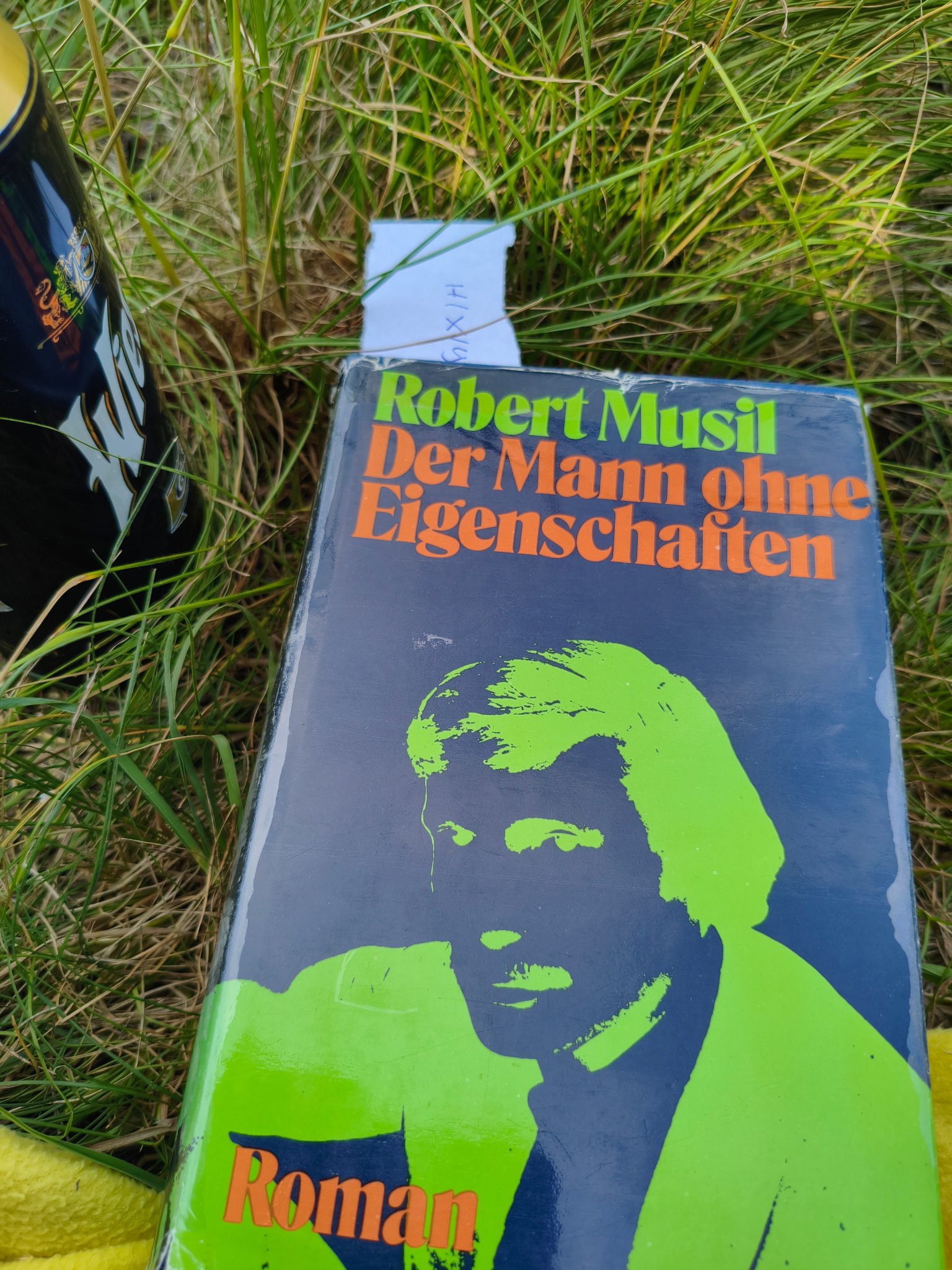
I've meant to read Perec's Life: A User's Manual for some time after, but I have trouble imagining just how you could top a book this clever and fun to read.

Re: What are you currently reading?

Posted: Tue Jun 02, 2026 9:55 am
by Alrune
Amlux wrote: Tue Jun 02, 2026 8:31 am
What language are you reading this Roubaud book in, if you don't mind me asking?
I am reading it in the original french. I am not french but I lived in France for a time and if I have a dictionary handy I can make steady progress.
Amlux wrote: Tue Jun 02, 2026 8:31 am
I read La Disparition many years ago in the English translation by Gilbert Adair, known as A Void.
I actually have a small collection of La Disparition(s) in different translations precisely because I find it fascinating how it becomes entangled when it encounters another language. The translator really has to work to melt it down and reshape it to lend it another form of intelligibility because of the conceit of not using the most common letter of their alphabet.

Häviäminen (the Finnish translation) for example lacks the letter a instead of e.

Also, In the french original and the English translation there is no fifth chapter, because the letter e is the fifth letter of their alphabets. But in the Turkish translation Kayboluş (I cannot read Turkish, alas) the sixth chapter is missing, because Ç makes e take the sixth position. Similarly, Finnish does not have a first chapter.
Amlux wrote: Tue Jun 02, 2026 8:31 am
I've meant to read Perec's Life: A User's Manual for some time after, but I have trouble imagining just how you could top a book this clever and fun to read.
You really should read it at some point :happy:
It is quite different from La Disparition and the formal constraints takes a little longer to take effect but in my opinion it is the best Perec.

I know there is a Japanese translation (of La Disparition) as well. Do you know how that would work?