Page 1 of 5
Random, Miscellaneous, Anything Else
Posted: Thu Jul 02, 2026 1:17 pm
by drummyfish
I don't want to be spamming new threads but for the sake of completeness I feel like it makes sense to establish an "anything else" thread in our "anything else" section. Here is the place for random showerthoughts, curious finds and questions that don't deserve their own thread.
Want to share something cool that happened to you today? Heard a funny joke? Feel depressed and wanna vent? Need a few people for a quick multiplayer game? You can try your luck here. Derailing the thread is allowed since there is no direction in the first place

A little bit of chaos is expected and welcome.
Let me start with a mildly interesting article about
basic color terms in human languages. It turns out that the order in which names for colors appear in human languages is surprisingly consistent (black and white, then red, then green or yellow, ...) and that we can categorize languages into development phases I through VII by which colors have their own names. English is phase VII but Mandarin Chinese, for example, only phase V. Language and colors have a profound relationship in other ways too. We mentally distinguish between colors based on which ones have separate names, so at least in this small way the language you currently operate in literally determines how you perceive the world. Homer in his works famously used
some weird colors that we don't really know much about. This all comes from one video I watched yesterday where I also learned that the color orange in English got its name after the fruit, and before this people didn't think of orange as a separate color -- they'd rather place it either under yellow or red. Brown is another cool example since it is just dark orange color that we somehow ended up giving a special name.
EDIT: I forgot to mention that this place can also serve as a topic tester. If something gets traction and sparks a bigger debate, it's cool to start a new thread just about that topic alone.
Re: Random, Miscellaneous, Anything Else
Posted: Thu Jul 02, 2026 2:54 pm
by Amlux
Cool topic. I approve! I find the color thing really interesting too. I'm sure you've researched a lot of it, but there's a lot of examples like this in
The Tale of Genji, the most famous classic Japanese novel. There's a ton of names for colors that we just kind of have to guess our best at.
One of the most interesting examples that any Japanese learner will have to deal with is that in classic China and Japan there didn't really seem to be a separation of blue and green. You see remnants of this in Japanese today. They use the word 青い (aoi, normally translated as "blue") to refer to traffic lights when they turn "green" and "green" apples. But it's not everywhere. They say "green" (緑, midori) normally in many other cases.
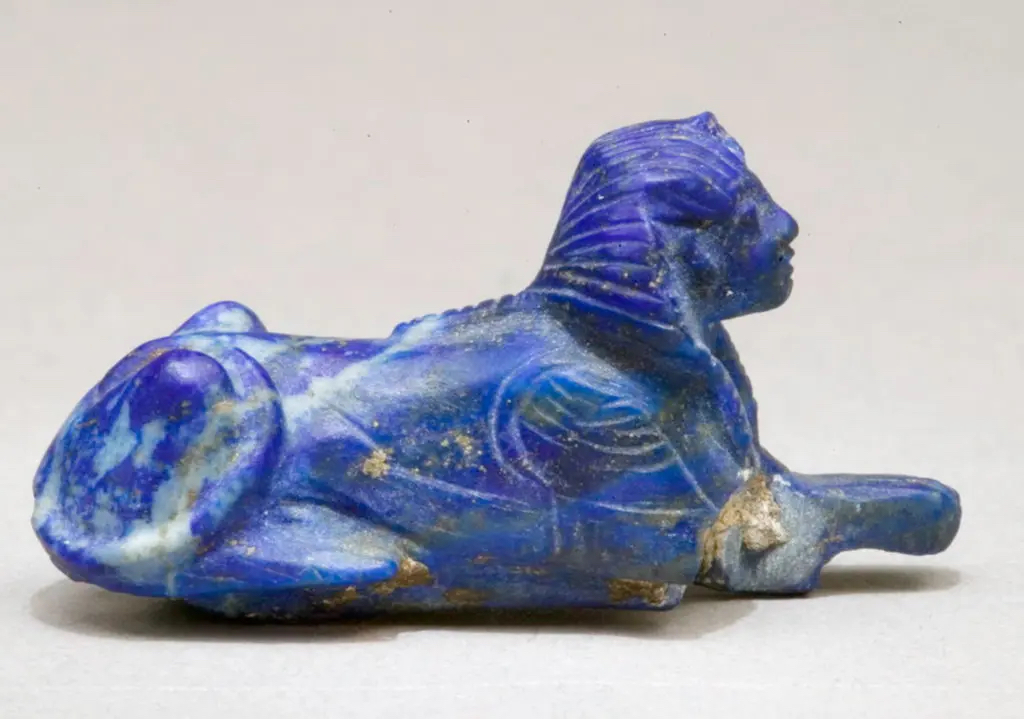
I also heard that some think that Egyptians may have had a concept of "blue" earlier than people like Homer because of the comparatively common availability of lapis lazuli (they still had to import it all from Afghanistan I think so it wasn't like it was everywhere!).
Re: Random, Miscellaneous, Anything Else
Posted: Thu Jul 02, 2026 5:10 pm
by Deoster
This is a very interesting topic; it really gets you thinking about the difference between what we directly "perceive" and how we interpret and structure that perception. I have a slightly similar silly example that I find really baffling: in everyday Russian, there's no difference between saying "hands" (руки) and "arms" (also руки). In the same way, "legs" (ноги) is the same as "feet" (also ноги). I find it quite surprising how you really can't differentiate colloquially between "my hand hurts" and "my arm hurts." I'm just very used to the English separation.
Re: Random, Miscellaneous, Anything Else
Posted: Thu Jul 02, 2026 5:42 pm
by drummyfish
Deoster wrote: Thu Jul 02, 2026 5:10 pm
This is a very interesting topic; it really gets you thinking about the difference between what we directly "perceive" and how we interpret and structure that perception. I have a slightly similar silly example that I find really baffling: in everyday Russian, there's no difference between saying "hands" (руки) and "arms" (also руки). In the same way, "legs" (ноги) is the same as "feet" (also ноги). I find it quite surprising how you really can't differentiate colloquially between "my hand hurts" and "my arm hurts." I'm just very used to the English separation.
In Czech this is the same, we have a formal word for "arm" ("paže"), but we don't use it, we just say "ruka" ("hand"), and because of it I tend to say "hand" in English when I should really rather say "arm". I'm not sure but suspect In Spanish it may be similar (mano vs brazo)? I've read somewhere that it is an incorrect popular belief that when they crucified Jesus, they put the nails through his palms, which doesn't work, and instead the nails had to go through the forearm, and the erroneous beliefs stems from a loss in translation -- in ancient Greek the term for hand actually extended a bit to the forearm, but this detail is lost when we simply translate it as "hand". And it's a great example you came up with as I am now wondering about how far the language influence on our perception stretches. I have already started to notice after my few decades of life how the slow change in language makes me think in new ways because I now have shortcut labels for complex concepts that I didn't have before (words like "meme", "toxic", "minmaxing", "blackpill" and this kind of stuff).
By the way the video I have watched is this:
The guy seems to have a lot of other interesting stuff as well. Currently I'm watching some hour long summary of ceiling fan history of his.
Re: Random, Miscellaneous, Anything Else
Posted: Thu Jul 02, 2026 5:47 pm
by Deoster
drummyfish wrote: Thu Jul 02, 2026 5:42 pm
I've read somewhere that it is an incorrect popular belief that when they crucified Jesus, they put the nails through his palms, which doesn't work, and instead the nails had to go through the forearm, and the erroneous beliefs stems from a loss in translation -- in ancient Greek the term for hand actually extended a bit to the forearm, but this detail is lost when we simply translate it as "hand".
I'd never heard about that, very interesting.
drummyfish wrote: Thu Jul 02, 2026 5:42 pm
The guy seems to have a lot of other interesting stuff as well. Currently I'm watching some hour long summary of ceiling fan history of his.
Thanks for the recommendation! I've really enjoyed all the Technology Connections videos I've seen; the recent one about renewable energy is quite good and persuasive.
Re: Random, Miscellaneous, Anything Else
Posted: Fri Jul 03, 2026 10:41 am
by drummyfish
Amlux wrote: Thu Jul 02, 2026 2:54 pm
Cool topic. I approve! I find the color thing really interesting too. I'm sure you've researched a lot of it, but there's a lot of examples like this in
The Tale of Genji, the most famous classic Japanese novel. There's a ton of names for colors that we just kind of have to guess our best at.
One of the most interesting examples that any Japanese learner will have to deal with is that in classic China and Japan there didn't really seem to be a separation of blue and green. You see remnants of this in Japanese today. They use the word 青い (aoi, normally translated as "blue") to refer to traffic lights when they turn "green" and "green" apples. But it's not everywhere. They say "green" (緑, midori) normally in many other cases.
I also heard that some think that Egyptians may have had a concept of "blue" earlier than people like Homer because of the comparatively common availability of lapis lazuli (they still had to import it all from Afghanistan I think so it wasn't like it was everywhere!).
This is fascinating, first time I hear about this, thank you
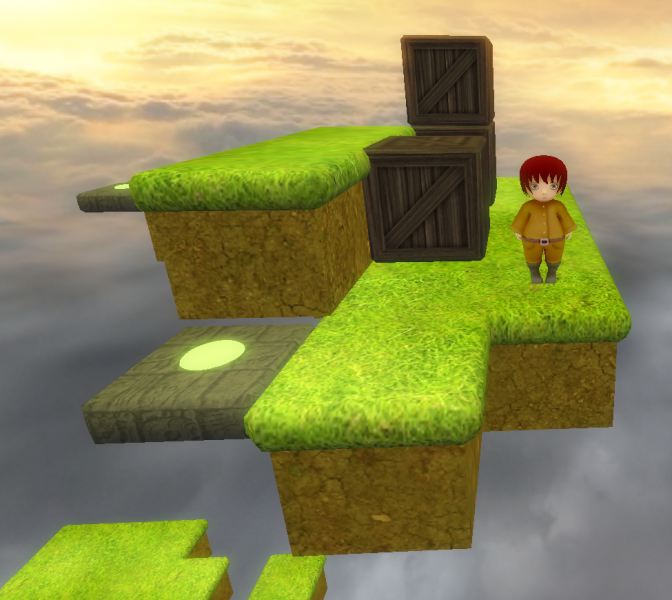
To keep on that promise of derailing this, yesterday I encountered a lovely little libre game called Puzzle Moppet. For those not in the know: libre means it is not only gratis, but free as in freedom (and open source), and not just the engine but assets as well. It's practically just a simple 3D sokoban but it had me entertained for good few hours so far, which in my case rarely happens nowadays. You can check it out here:
https://garnetgames.com/puzzlemoppet/.
Re: Random, Miscellaneous, Anything Else
Posted: Sat Jul 04, 2026 9:27 pm
by satoridepon
Happy 4th of July for americans, it's the shittiest country on Earth and it should collapse already.
 (but the USA did make anime exist...)
Re: Random, Miscellaneous, Anything Else
Posted: Sun Jul 05, 2026 3:04 am
by Thricegreat
drummyfish wrote: Thu Jul 02, 2026 5:42 pm
Deoster wrote: Thu Jul 02, 2026 5:10 pm
This is a very interesting topic; it really gets you thinking about the difference between what we directly "perceive" and how we interpret and structure that perception. I have a slightly similar silly example that I find really baffling: in everyday Russian, there's no difference between saying "hands" (руки) and "arms" (also руки). In the same way, "legs" (ноги) is the same as "feet" (also ноги). I find it quite surprising how you really can't differentiate colloquially between "my hand hurts" and "my arm hurts." I'm just very used to the English separation.
In Czech this is the same, we have a formal word for "arm" ("paže"), but we don't use it, we just say "ruka" ("hand"), and because of it I tend to say "hand" in English when I should really rather say "arm". I'm not sure but suspect In Spanish it may be similar (mano vs brazo)? I've read somewhere that it is an incorrect popular belief that when they crucified Jesus, they put the nails through his palms, which doesn't work, and instead the nails had to go through the forearm, and the erroneous beliefs stems from a loss in translation -- in ancient Greek the term for hand actually extended a bit to the forearm, but this detail is lost when we simply translate it as "hand". And it's a great example you came up with as I am now wondering about how far the language influence on our perception stretches. I have already started to notice after my few decades of life how the slow change in language makes me think in new ways because I now have shortcut labels for complex concepts that I didn't have before (words like "meme", "toxic", "minmaxing", "blackpill" and this kind of stuff).
By the way the video I have watched is this:
The guy seems to have a lot of other interesting stuff as well. Currently I'm watching some hour long summary of ceiling fan history of his.
In Japanese, foot and leg have the same pronunciation but different characters.
足: Foot. Pronunciated as "ashi".
脚: Leg. Pronunciated as "ashi".
Re: Random, Miscellaneous, Anything Else
Posted: Mon Jul 06, 2026 11:26 am
by Alrune
I am re-reading Ray Monk's Wittgenstein biography at the moment and the short summary of Wittgenstein's PhD defense is even funnier the second time around (he was granted the title for the Tractatus on the recommendation of Frank Ramsey, about seven years after it was written and already considered a classic in philosophical circles. Bertrand Russell and G.E. Moore were present as examiners).
From The Duty of Genius:
"The Viva [defense] was set for 18 June 1929, and was conducted with an air of farcical ritual. As Russell walked into the examination room with Moore, he smiled and said: ‘I have never known anything so absurd in my life.’ The examination began with a chat between old friends. Then Russell, relishing the absurdity of the situation, said to Moore: ‘Go on, you’ve got to ask him some questions – you’re the professor.’ There followed a short discussion in which Russell advanced his view that Wittgenstein was inconsistent in claiming to have expressed unassailable truths by means of meaningless propositions. He was, of course, unable to convince Wittgenstein, who brought the proceedings to an end by clapping each of his examiners on the shoulder and remarking consolingly: ‘Don’t worry, I know you’ll never understand it.’"
Re: Random, Miscellaneous, Anything Else
Posted: Wed Jul 08, 2026 9:09 pm
by drummyfish
Here is a massive philosophy joke from my country. If you don't know
Jára Cimrman, then in short: he's a fictional Czech genius that the country pretends has actually existed and basically invented everything that's credited to other geniuses and was completely forgotten by history. The character was created by a bunch of amateur actors who made a lot of plays about him which got immensely popular and are now part of Czech culture. Each play is traditionally preceded by a lecture where the Cimrman "historians" present various findings about him -- it turns out he was the world's best inventor, engineer, poet, educator and, of course, philosopher too. In one lecture they present his philosophical theory of knowledge. Below is a video, in Czech -- there is some weird thing going on with subtitles, I can turn on auto-translated English subtitles in Freetube but for some reason English is missing in the embedded YouTube player here, so I'll also add an auto translate of the original text below (it may actually be even better than the subtitles as there's no speech recognition going on).
Only recently did I discover a letter in Einstein's correspondence in which Cimrman introduces his friend to the definitive outline of externalism. He explains to him that according to this philosophy, the existence of things is exactly the opposite of what is commonly believed: a thing is where we think it is not, and is not where we think it is. In other words, in popular terms: if I hold this piece of chalk in my hand, for example, then according to Cimrman, this chalk fills the entire space around it continuously, and only in the place you see is this chalk not there. What I hold in my hand is actually just a kind of empty bubble in a continuous mass of chalk. Einstein found such a description of the world remarkable. - In the original, he even called Cimrman's views "funny". - However, he also had objections. I quote: "As a physicist, I must point out to you that nothing changes about the essence of reality itself if you label a THING as VOID and an empty environment as a THING. That is just a play on words." In the original: "The ping-pong with the words." - So much for Einstein.
(youtube video starts here)
Before I introduce you to Cimrman's answer to this objection of Einstein's, I must mention the philosopher F. C. Bohlen, whose name probably means nothing to you today. No wonder: he was active in philosophy only as a dilettante. His own profession was a merchant - he had a large drugstore in Essen. And he was perhaps only famous for being rude and vulgar to his customers. Well - and this vulgar materialist also got involved in philosophy. And it is precisely in comparison with his theory of knowledge that Cimrman explains his own principles of knowledge to Einstein. I will quote them according to Cimrman's letter.
According to the vulgar materialist Bohlen, the basic concept of our knowledge is TRUTH, even though Bohlen admits that it is initially INACCURATE. Cimrman, on the other hand, says that the basic concept of knowledge is ERROR, initially of course ACCURATE.
As our knowledge deepens, we reach the second phase of the cognitive process, in which, according to Bohlen, WE REFINE THE TRUTH, while according to Cimrman we only REFUTE THE ERROR.
The ultimate goal of our knowledge, according to Bohlen, is then the state when the truth is already absolutely accurate and we WE KNOW EVERYTHING. According to Cimrman, at the end of the cognitive process, error is completely refuted and we KNOW NOTHING.
But be careful. I would not like you to consider Cimrman to be some kind of agnostic or nihilist. He understands knowledge as an essentially positive process, in which we free ourselves from the initial error, so that - as he literally says - "we finally stand before the face of the Universe with a clear and empty head." The fact that we know nothing at the end of knowledge is only a logical consequence of his externalism. In the process of knowledge, as we have shown in this chalk, we approach the place where the thing is not. If we therefore reach the object itself, we do not reach, as Bohlen claims, the core of the thing, but we step into the void. So at the end of the cognitive process we do not know anything, but we know it correctly.
But here again the proverbial Cimrman contradiction (Cimrmanscher Widerspurch) occurs: his theory of knowledge can be applied to the whole of existence, but with one exception - and that is Cimrman's theory of knowledge itself. Applied to itself, it refutes itself: either it is ERROR, or we DO NOT KNOW it.
However, Cimrman knew his way around here too. Just before he uttered his final sentence WE KNOW NOTHING, he took a so-called STEP SIDEWAYS. This put him - but only for a moment - on the ground of vulgar materialism, from where he could acknowledge his theory of knowledge as objectively true and then return back.
Cimrman then connected the conclusions of both theories with the so-called COLON OPERATOR, which gives both contradictory statements a common outcome in the famous philosophical sentence: WE KNOW EVERYTHING: WE KNOW NOTHING.